
Emotional learning & wellbeing planner (ages 3-5)
$5.00
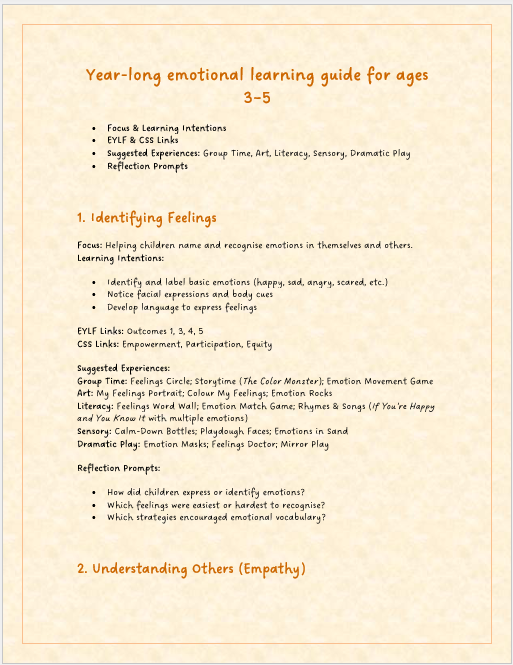
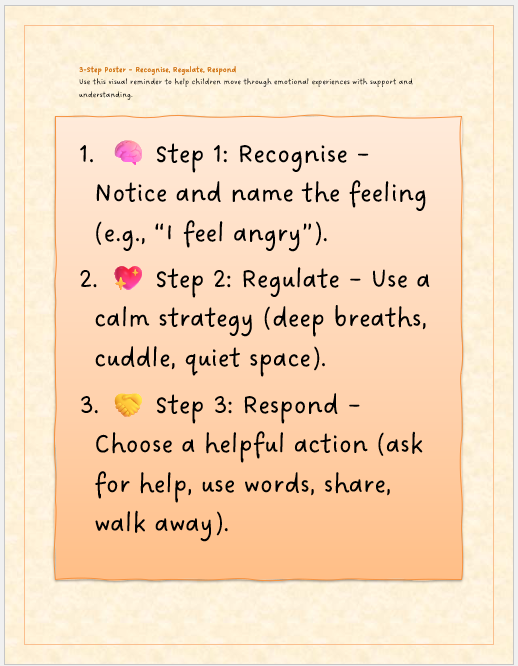
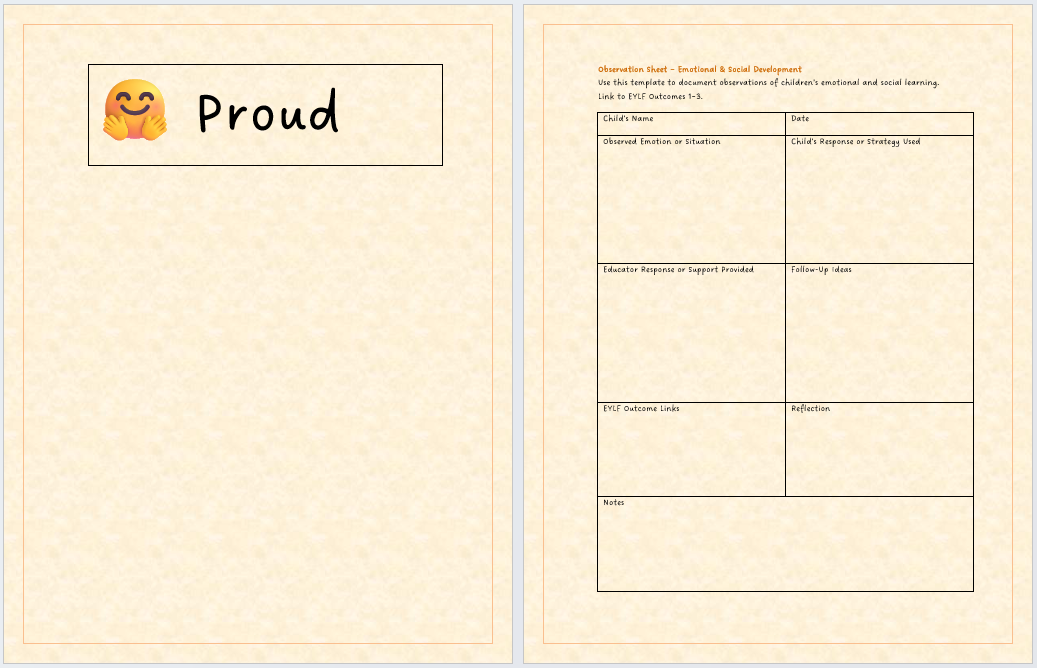
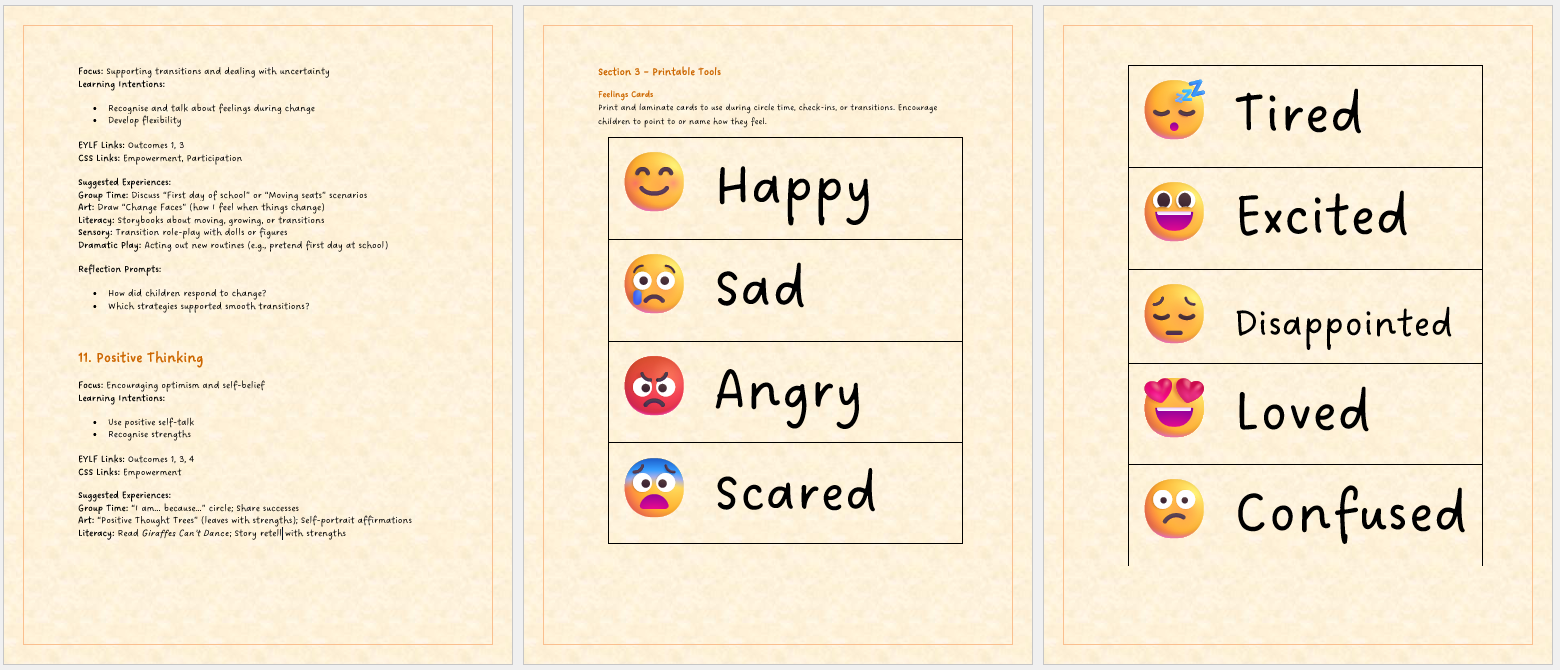
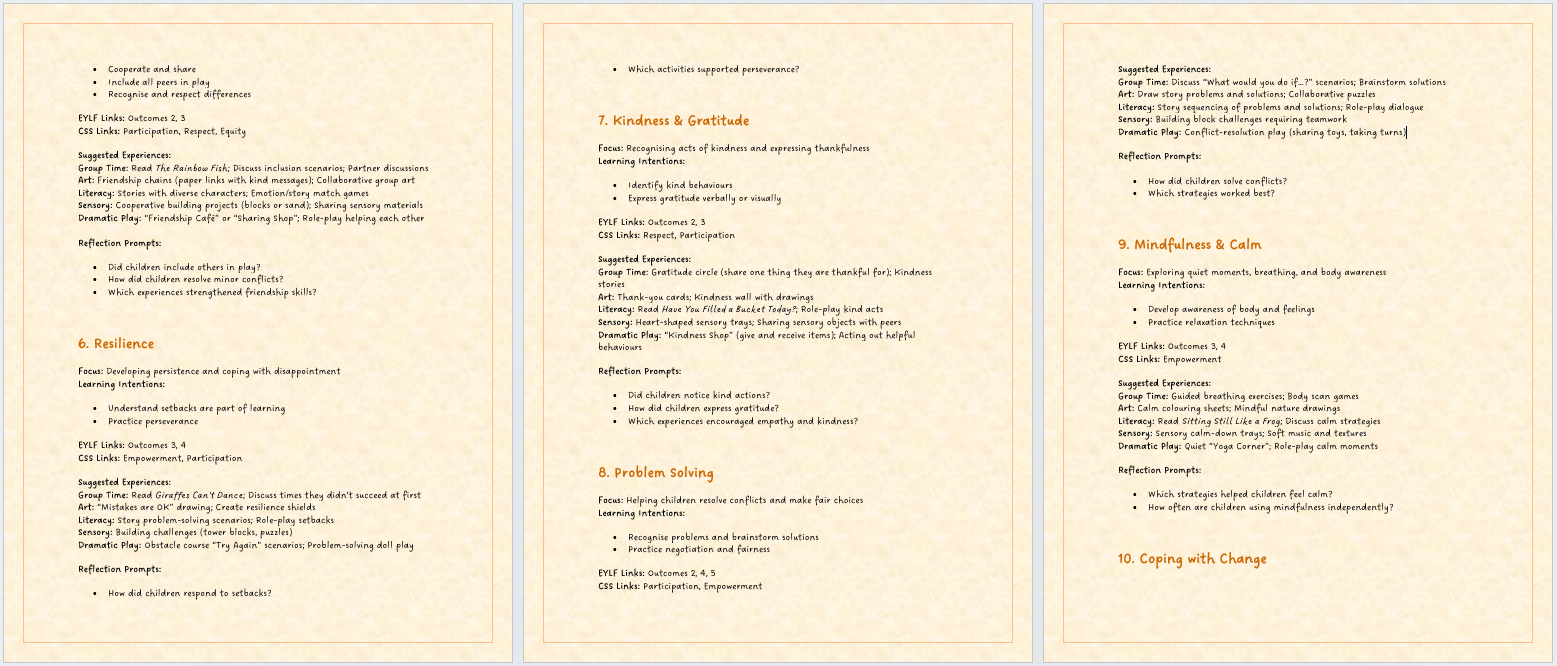
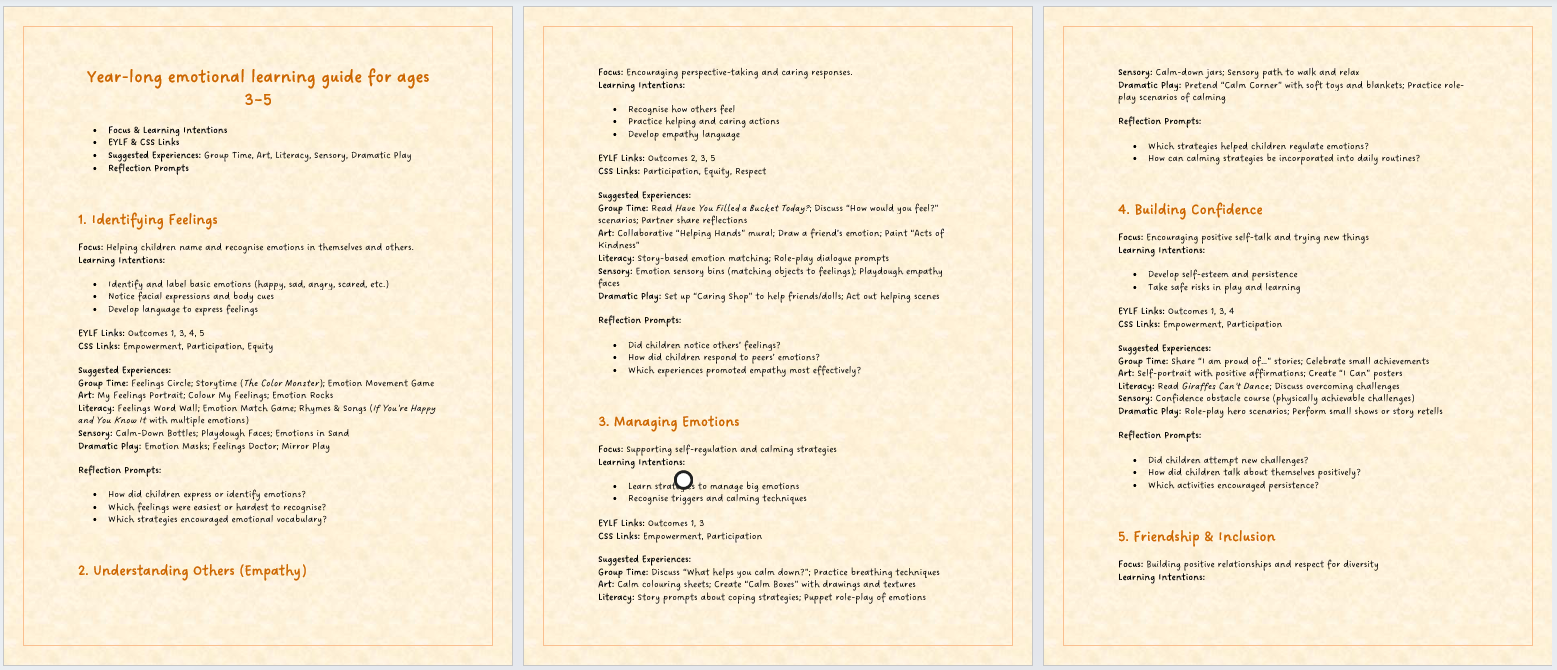
A comprehensive year-long emotional learning guide for children aged 3–5 years, exploring 11 key areas of social and emotional development. Includes learning intentions, EYLF and Child Safe Standards links, practical experience ideas across five learning areas, and educator reflection prompts. Also features printable Feelings Cards, an Emotional & Social Development Observation Sheet and a Recognise, Regulate, Respond poster to support children’s emotional awareness, self-regulation, confidence, empathy and resilience.
Description
Supporting children to understand their emotions, develop positive relationships and build the foundations for lifelong emotional wellbeing is an important part of early childhood education.
This comprehensive, year-long emotional learning guide provides educators with a structured yet flexible approach to intentionally embedding emotional and social learning into everyday experiences for children aged 3–5 years.
Exploring 11 key areas of emotional development, the guide offers practical learning intentions, suggested experiences and reflection prompts to help educators support children as they develop emotional awareness, empathy, self-regulation, confidence and resilience.
Each topic connects to the Early Years Learning Framework (EYLF) and Child Safe Standards (CSS), helping educators make meaningful links between children’s emotional development, wellbeing, participation, empowerment and inclusion.
Inside the guide:
11 Emotional Learning Topics
- Identifying Feelings
- Understanding Others (Empathy)
- Managing Emotions
- Building Confidence
- Friendship & Inclusion
- Resilience
- Kindness & Gratitude
- Problem Solving
- Mindfulness & Calm
- Coping with Change
- Positive Thinking
Each topic includes:
- A clear focus and learning intentions.
- Relevant EYLF Outcome and Child Safe Standards connections.
- Practical experience suggestions across group time, art, literacy, sensory play and dramatic play.
- Reflection prompts to encourage intentional teaching and evaluate children’s learning.
Additional Printable Tools:
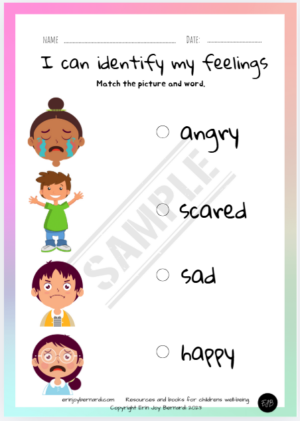
- Feelings Cards to support emotional identification, daily check-ins and conversations.
- Emotional & Social Development Observation Sheet to document children’s experiences, responses, educator support and future planning.
- Recognise, Regulate, Respond 3-Step Poster to help children understand and navigate emotional experiences with supportive strategies.
Designed to be used throughout the year, this resource gives educators a starting point for meaningful conversations, intentional experiences and ongoing reflection, while allowing learning to evolve in response to children’s individual needs, interests and developmental stages.
Whether you are introducing emotional learning as a planned focus or embedding it into your existing educational program, this guide provides practical ideas to help make emotional development a meaningful part of everyday practice.
Because emotional intelligence isn’t something children simply learn about. It’s something they develop through relationships, experiences, opportunities and the support of the adults around them.




Reviews
There are no reviews yet.