
Checklist-Setting up for the start of the year
$1.00
A collection of three practical checklists to help educators create intentional, inclusive and engaging early childhood environments. Covering warm and welcoming spaces, provocative and enquiry-based learning environments, and purposeful start-of-year displays, these resources support educators to reflect on belonging, wellbeing, curiosity, children’s agency and meaningful learning. Includes reflection prompts and space to identify opportunities for improvement, aligned with the EYLF and intentional teaching practice.
Description
Creating an intentional early childhood environment involves much more than arranging furniture and putting up displays. Every space, resource and visual element contributes to how children feel, connect, explore and learn.
This practical resource includes three complementary checklists designed to help educators reflect on their learning environments, make purposeful decisions and create spaces that genuinely support children’s belonging, wellbeing, curiosity and learning.
Each checklist provides clear prompts to guide educators in evaluating their current environment, identifying opportunities for improvement and ensuring their spaces remain meaningful, inclusive and responsive to the children who use them.
Inside the resource:
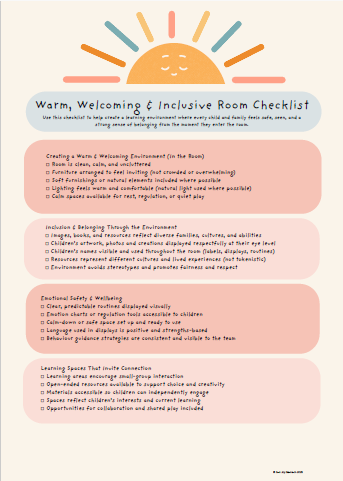
1. Warm, Welcoming & Inclusive Room Checklist
- Creating calm, comfortable and inviting spaces.
- Reflecting children’s identities, cultures, families and abilities.
- Supporting emotional safety, wellbeing and belonging.
- Establishing meaningful learning spaces that encourage connection.
- Strengthening family communication and inclusive educator interactions.
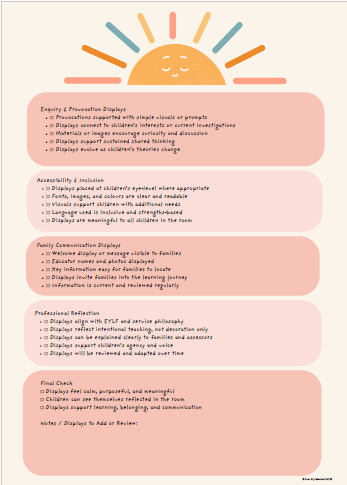
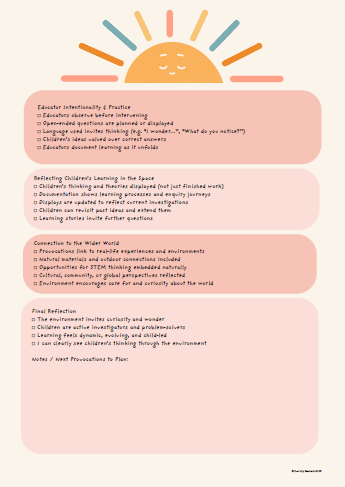
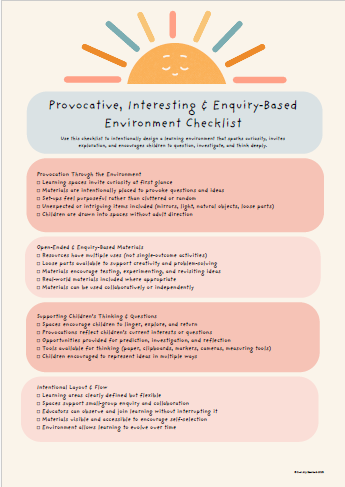
2. Provocative, Interesting & Enquiry-Based Environment Checklist
- Designing spaces that spark curiosity and wonder.
- Selecting open-ended resources and loose parts.
- Encouraging investigation, problem-solving and critical thinking.
- Supporting intentional teaching and sustained shared thinking.
- Making children’s ideas, theories and learning visible.
- Connecting learning to the natural and wider world.
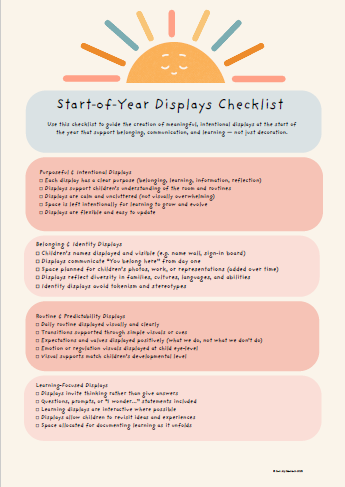
3. Start-of-Year Displays Checklist
- Creating purposeful displays that support belonging and learning.
- Planning identity, routine and communication displays.
- Incorporating enquiry prompts and learning provocations.
- Ensuring displays are accessible, inclusive and meaningful.
- Supporting children’s agency, voice and evolving learning journeys.
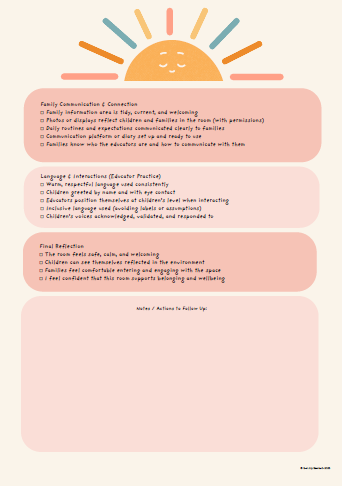
Each checklist includes a final reflection section and space to record notes, actions and opportunities for improvement.
Grounded in the EYLF and intentional educational practice, this resource encourages educators to look beyond how a room appears and consider how effectively it supports children’s experiences, relationships and development.
Ideal for start-of-year room preparation, educational leader walkthroughs, team discussions and ongoing quality improvement.
Because the best learning environments don’t simply look inviting. They make children feel they belong, encourage them to wonder and give them opportunities to grow.


Reviews
There are no reviews yet.